
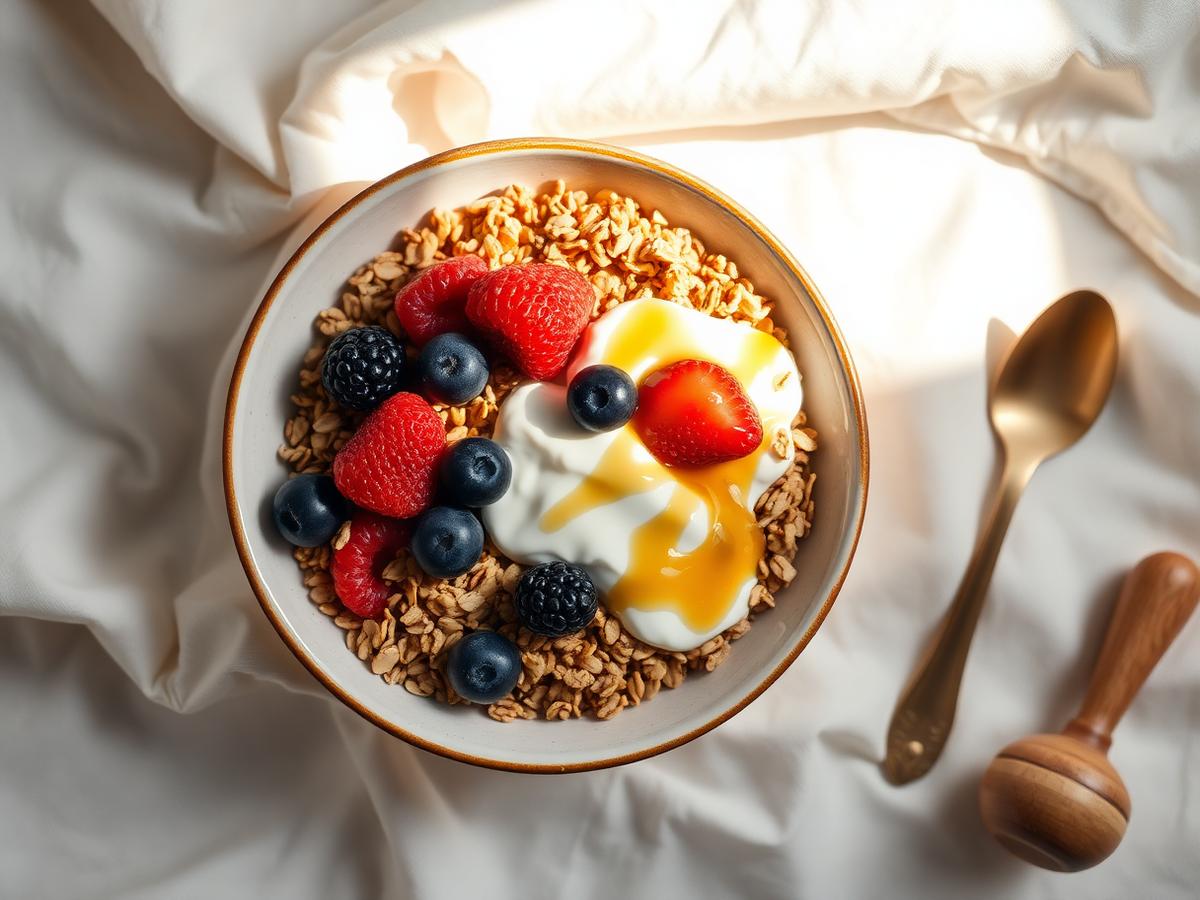
Once you make granola at home you stop buying it. The shop versions are too sweet, too greasy, and never have enough clusters. This one is the opposite of all those things.
Why homemade granola is worth your forty minutes
Most supermarket granolas are essentially loose oat-shaped sugar candy. Even the ones marketed as healthy often contain more added sugar per serving than a chocolate biscuit, with the bonus of inflammatory seed oils to bind it all together. Once you make granola at home, you'll struggle to go back.
This version uses just enough maple syrup to create the satisfying golden clusters that make granola worth eating, plus a generous amount of almonds, oats, and seeds for genuine staying power. A tablespoon of vanilla bean paste (or extract) added at the end of baking gives every bite that warm, fragrant note that's so often missing from commercial versions.
Make a batch on a Sunday afternoon, store it in a glass jar on the counter, and you've solved breakfast for the next two weeks. Sprinkle it over yogurt, eat it with cold milk, or just snack on it by the handful straight from the jar.
- Significantly less sugar than store-bought versions
- Forms big, satisfying clusters when made correctly
- Customisable with whatever nuts, seeds, or spices you like
- Keeps fresh for two weeks at room temperature
The secret to big, satisfying clusters
Cluster granola is the gold standard, and it's easier to achieve than you might think. The secret comes down to three things: a binder that crisps as it bakes, the right baking technique, and — crucially — patience.
For the binder, a combination of maple syrup and a single egg white works miraculously well (use aquafaba — the liquid from a can of chickpeas — for a vegan version). The egg white acts like a natural glue, holding the oats and nuts together as they bake into crisp clumps. Coconut oil adds richness and helps everything brown evenly.
Press the mixture firmly into a single, compact layer on the baking tray — don't spread it loosely. Bake low and slow at 150°C (300°F), stirring only once halfway through. And then, the hardest part: let it cool completely on the tray, undisturbed, before breaking it up. The clusters set as they cool. Stirring while warm shatters them into dust.
What's in the bowl
Old-fashioned rolled oats
Use old-fashioned rolled oats, not quick oats and not steel-cut. Rolled oats have the right surface area to crisp up beautifully without turning to powder. They're also a brilliant source of beta-glucan, a soluble fibre that the American Heart Association has linked to lower LDL cholesterol when consumed daily.
Almonds and seeds
Roughly chopped raw almonds are the star, bringing protein, healthy fats, and a satisfying crunch. A handful of pumpkin seeds and sunflower seeds adds variety and bumps up the mineral content — particularly magnesium and zinc. Toast everything together so all the nuts and seeds reach the same golden colour at the same time.
Feel free to swap or add: pecans, walnuts, hazelnuts, and cashews all work beautifully. Sesame seeds, hemp hearts, or flaxseeds can be sprinkled in for extra nutrition (add flax after baking, since it can turn bitter when overheated).
Real vanilla, added at the right time
Vanilla is what makes this granola memorable, but it's heat-sensitive. Stir it into the wet ingredients before baking and most of the flavour will burn off in the oven. Instead, add half before baking and drizzle the other half over the warm granola when it comes out of the oven. The residual heat releases the aroma without destroying it.
Use the best vanilla you can: a single Madagascar vanilla bean, scraped and added to the warm granola, will transform the entire batch. Failing that, a good-quality pure vanilla extract or vanilla bean paste does the job admirably. Avoid imitation vanilla flavouring.
Mix-ins to add after baking
Anything dried — dried fruit, chocolate chips, coconut flakes — should be added after the granola has cooled completely. Adding them before baking turns dried fruit into hard pebbles and chocolate into a melted mess.
- Dried tart cherries, cranberries, or chopped dates
- Dark chocolate chips or chopped 70% dark chocolate
- Toasted coconut flakes (toast separately for two minutes)
- Bee pollen or cacao nibs for a superfood boost
- Freeze-dried raspberries or strawberries for colour
How to serve homemade granola
The classic serving is over yogurt with fresh fruit — try it with thick Greek yogurt and sliced peaches in summer, or with the raspberry coconut yogurt bark for a probiotic-rich, crunchy treat. It's equally good as a topping for smoothie bowls or scattered over baked apples for an easy autumn dessert.
For breakfast, a half-cup serving with cold milk and a handful of berries provides slow-release energy that genuinely lasts until lunch. The combination of fibre from the oats, healthy fats from the almonds, and protein from the seeds slows digestion and keeps blood sugar stable — far more sustaining than the cereal-aisle alternatives.
Store the cooled granola in an airtight glass jar at room temperature for up to two weeks. If your kitchen runs warm or humid, refrigerate or freeze it to keep the clusters crisp. Pair it with a iced lavender latte for a slow, leisurely breakfast worth setting the alarm for.
Method
- Preheat oven to 325°F (160°C). Mix oats, almonds, seeds, coconut, cinnamon and salt.
- Whisk maple, coconut oil, vanilla and egg white. Pour over the dry ingredients and mix thoroughly.
- Press firmly into an even layer on a parchment-lined sheet pan.
- Bake 30 minutes, rotating once. Don't stir — that's how you get clusters.
- Cool completely before breaking into chunks. Keeps 3 weeks in a sealed jar.
Cook's note
The egg white trick is the secret to bakery-style clusters. Skip it for a looser, vegan version.