
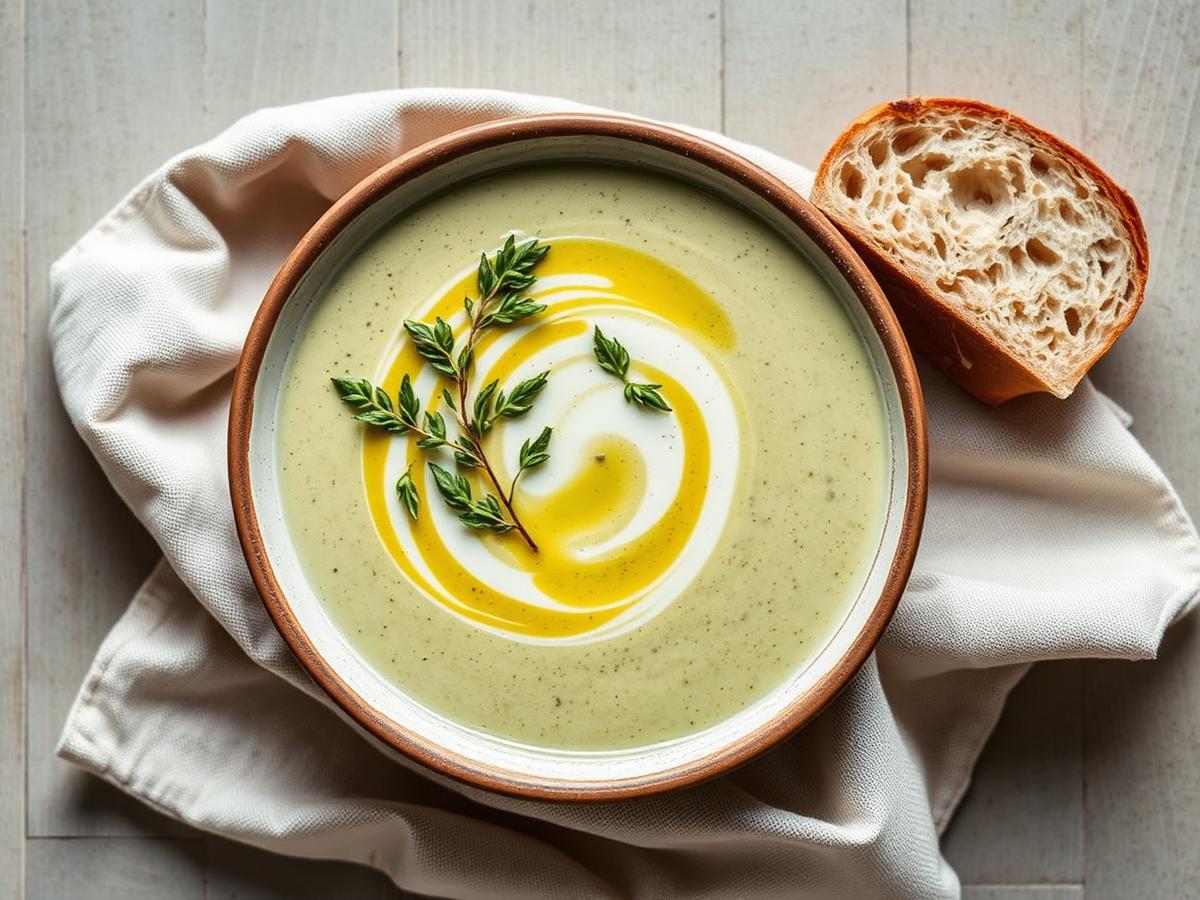
This is what a Tuscan grandmother would cook on a Tuesday — beans, good olive oil, a sprig of rosemary from the garden. It's the proof that the best food is often the simplest.
Cucina povera: the genius of cooking with very little
Tuscan home cooking has a name for this kind of meal — cucina povera, 'poor kitchen' — and it's a love letter to making the most of pantry staples. A can of beans, a clove of garlic, a sprig of rosemary, a glug of really good olive oil. That's the whole architecture, and somehow it produces one of the most comforting bowls of food you can put on a table.
This is the soup I cook on Tuesdays when the fridge is bare, and also the soup I serve to guests when I want something that tastes like a holiday in Italy. It scales effortlessly and only gets better the next day.
- Ready in 30 minutes from pantry staples
- Naturally vegan and gluten-free
- About 12g of fibre per bowl — a serious gut-health win
- Freezes beautifully for up to 3 months
Ingredient notes
The beans: dried vs canned
Cannellini are the classic Tuscan choice — large, creamy, and tender. Great Northern beans or butter beans (lima) make excellent substitutes. If you have time and inclination, dried beans cooked from scratch are noticeably better: the cooking liquid becomes a rich, starchy broth that gives the soup its characteristic body.
If you're using canned beans (no shame at all — most Italian nonnas would on a Tuesday), look for jarred Spanish or Italian beans which tend to be larger and creamier than supermarket canned. Don't drain off all the liquid — a few tablespoons added back into the soup boost the body.
Rosemary, used wisely
Rosemary is powerful — too much and the soup tastes like pine needles. One whole sprig added during cooking and then fished out is the right move. If you want a stronger rosemary flavour, finely mince an extra teaspoon and stir it into the warm finishing oil instead of cooking it.
The finishing olive oil
This is the place to use your best, most peppery extra virgin olive oil. Tuscan olive oil is famously grassy and assertive — exactly the right counterpoint to the creamy beans. Drizzle generously over each bowl just before serving; cooking destroys most of the flavour compounds, so the raw drizzle at the end is what carries the dish.
Step-by-step method
There are two small techniques that separate a good white bean soup from a great one: blooming the garlic and rosemary in cold oil, and mashing some of the beans for body.
- Start with cold oil and add garlic and rosemary together — this slowly extracts their flavour without burning
- Cook the onion until truly soft (8–10 minutes) before adding liquid; this builds sweetness
- Mash about a third of the beans against the side of the pot — instant creaminess without a blender
- Add the kale only in the last 3 minutes; longer and it goes army-green and bitter
- Finish off the heat with lemon and chilli flakes for brightness
Variations on the theme
Once you've made this once, you'll start riffing:
- Add a parmesan rind during simmering for extra savoury depth (skip for vegan)
- Stir in a spoonful of pesto at the end for a Ligurian twist
- Top with a fried sage leaf for a fancier presentation
- Add small pasta (ditalini) to make it a pasta e fagioli
- Serve alongside our {{LINK:0}} for a complete winter dinner
Turn leftovers into ribollita
Ribollita literally means 'reboiled' — it's the second-day version of this soup, traditionally thickened with stale bread. Tear day-old sourdough into chunks, stir it into the reheated soup, and let it sit on the stove for 10 minutes until the bread has dissolved into the broth. Drizzle generously with olive oil and serve. It's arguably better than the original.
Make-ahead and storage
This soup keeps beautifully for 4 days in the fridge and freezes for up to 3 months. Add the kale fresh when reheating if you can — frozen-then-reheated kale loses its colour and texture. Reheat gently on the stove with a splash of water or broth to loosen.
Why beans deserve a spot in your weekly rotation
Beans are one of the few foods consistently associated with longevity in the world's so-called Blue Zones. They're rich in soluble fibre, plant protein, folate, and resistant starch that feeds beneficial gut bacteria. The American Heart Association recommends at least three servings of legumes per week as part of a heart-healthy diet.
Frequently asked questions
How can I make the soup thicker?
Mash more of the beans, or blend a cup of the finished soup and stir it back in. Avoid adding flour — it dulls the flavour.
Can I use spinach instead of kale?
Yes, though spinach wilts almost instantly and loses its body. Add it off the heat and serve immediately. Swiss chard is the closest substitute to kale here.
Method
- Warm olive oil with garlic and rosemary until fragrant — about 2 minutes.
- Add onion and cook until soft, then add beans and broth.
- Simmer 15 minutes, then mash a third of the beans against the side of the pot to thicken the soup.
- Stir in the kale and cook 3 minutes until wilted. Finish with lemon juice and chili flakes.
Cook's note
Reserve a slice of crusty sourdough for soaking — this soup demands it.